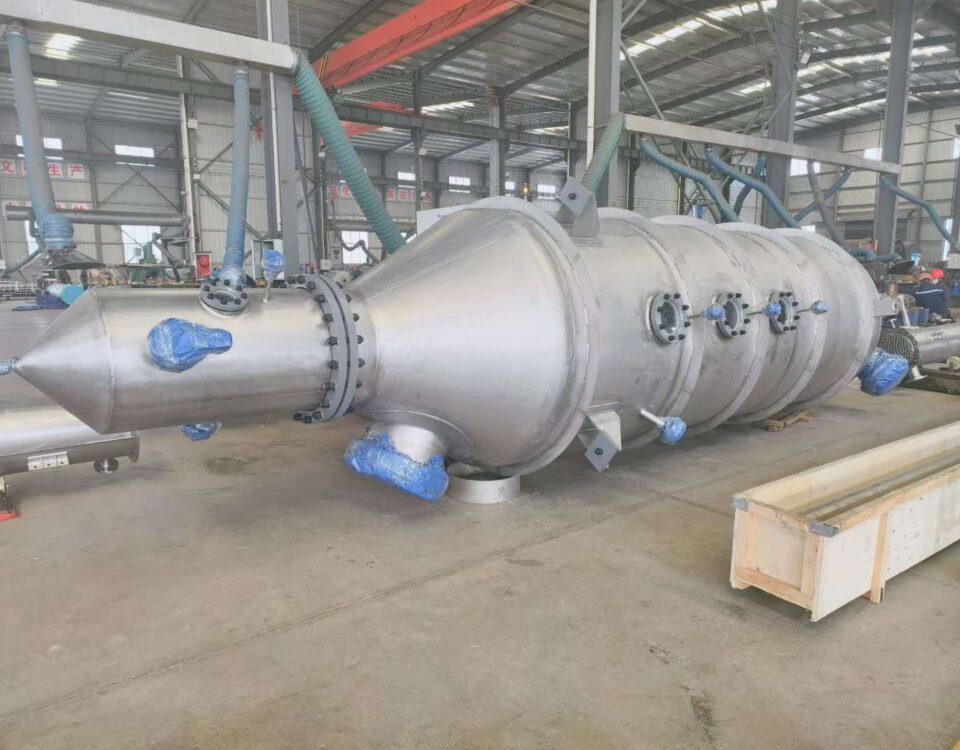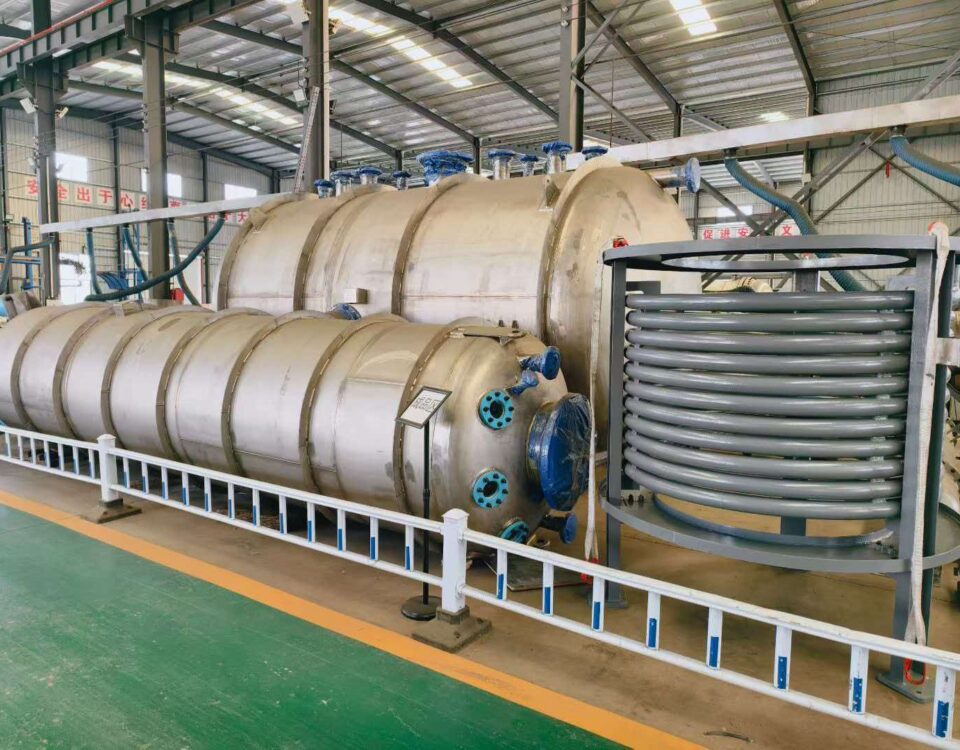
Titanium Plate Heat Exchanger
Titanium Plate heat exchanger is highly efficient heat exchange equipment, widely used in multiple industries, including HVAC, chemical, food, pharmaceutical and energy.
Plate heat exchanger can transfer heat, save energy and reduce consumption, control temperature, protect equipment, improve process efficiency and protect the environment.
Plate heat exchanger’s efficient heat exchange performance and flexible operation help improve production efficiency and economic benefits.
Plate heat exchangers made of titanium plates have many advantages and are very competitive in the market. They are mainly used in heat exchange systems such as chemical, petroleum, ships, and seawater desalination.
The application of titanium plate heat exchangers in seawater desalination has many advantages: stable and high efficiency, high heat exchange efficiency, corrosion resistance, etc.
Available Materials Grade of Plate Heat Exchanger
Titanium Plate Heat Exchanger; Nickel Plate Heat Exchanger.
Application of Titanium Plate Heat Exchanger
* Heating, ventilation and air conditioning (HVAC) systems
Titanium plate heat exchanger is widely used in HVAC systems for cooling and heating water systems. For example, in central air conditioning systems, Titanium plate heat exchanger can be used for heat exchange between refrigerant and water, or in boiler systems for heating and cooling hot water.
* Chemical industry
In the chemical production process, Titanium plate heat exchangers is used for heat exchange between different media. For example, in the chemical reaction process, temperature control is required, and heat exchange through Titanium plate heat exchanger can effectively maintain the stability of the reaction temperature.
* Food and beverage industry
Titanium plate heat exchanger is used in the food and beverage industry for pasteurization, cooling and heating processes. For example, in dairy processing, Titanium plate heat exchangers are used for pasteurization and cooling of milk; in beer production, Titanium plate heat exchangers are used for cooling and heating of wort.
* Pharmaceutical industry
The pharmaceutical process has extremely high requirements for sanitary conditions. Titanium plate heat exchanger is widely used in liquid heating, cooling and solvent recovery due to their easy cleaning and maintenance characteristics.
*Energy industry
In the energy sector, Titanium plate heat exchanger is used for heat recovery and waste heat utilization. For example, Titanium plate heat exchangers are used for boiler feed water heating in power plants or for recovering waste heat in industrial processes to improve energy efficiency.
The function of Titanium Plate Heat Exchanger
*Heat transfer
The main function of the Titanium plate heat exchanger is to transfer heat efficiently. Through the flow of liquid between thin metal plates, heat is transferred from the hot side to the cold side to achieve the purpose of heating or cooling.
* Energy saving and consumption reduction
Due to its efficient heat exchange performance, Titanium plate heat exchanger can maximize the use of heat energy and reduce energy consumption. In many industrial processes, energy costs can be significantly reduced and economic benefits improved by using plate heat exchangers.
*Temperature control
In the industrial production process, temperature control is an important factor in ensuring product quality and process stability. The Titanium plate heat exchanger achieves precise control of the temperature of the process medium through effective heat exchange, ensuring the stable operation of the production process.
*Device protection
Titanium plate heat exchanger can be used for cooling and protection of equipment. For example, during the operation of mechanical equipment, excessive temperature will cause equipment damage. Cooling through Titanium plate heat exchanger can effectively extend the service life of the equipment.
*Improve process efficiency
The efficient heat exchange performance and flexible operability of the plate heat exchanger enable it to be adjusted according to actual needs and improve the efficiency of the process. For example, in chemical reactions, reaction rates and product yields can be increased by precisely controlling temperature.
*Environmental protection
Titanium plate heat exchanger plays a significant role in waste heat recovery and energy saving. By effectively utilizing waste heat, Titanium plate heat exchanger can reduce thermal pollution to the environment and energy waste, and promote green production and sustainable development.
The Advantages of Plate Heat Exchanger
*Light weight. The plate thickness of the Titanium plate heat exchanger is only 0.4~0.8mm, while the thickness of the heat exchange tube of the shell and tube heat exchanger is 2.0~2.5mm. The shell of the shell and tube heat exchanger is much heavier than the frame of the plate heat exchanger. The Titanium plate heat exchanger is generally only about 1/5 of the weight of the shell and tube heat exchanger
*Low price. Using the same material, under the same heat exchange area, the price of the plate heat exchanger is about 40%~60% lower than that of the shell and tube heat exchanger.
*Easy to make. The heat transfer plate of the plate heat exchanger is stamped, with a high degree of standardization and can be mass-produced. The shell and tube heat exchanger is generally handmade.
*High heat transfer coefficient. Because different corrugated plates are inverted to form complex flow channels, the fluid flows in three dimensions in the flow channels between the corrugated plates, which can generate turbulence at a lower Reynolds number (generally Re=50~200). Therefore, the heat transfer coefficient is high, which is generally considered to be 3~5 times that of the shell and tube type.
*Large logarithmic mean temperature difference, small terminal temperature difference. In shell and tube heat exchangers, two fluids flow in the tube side and shell side respectively, which is generally cross-current flow. The correction coefficient of logarithmic mean temperature difference is small, while plate heat exchangers are mostly parallel or countercurrent flow, and their correction coefficient is usually around 0.95. In addition, the flow of cold and hot fluids in plate heat exchangers is parallel to the heat exchange surface and there is no bypass flow, so the terminal temperature difference of plate heat exchangers is small, and the heat exchange of water can be lower than 1°C, while the shell and tube heat exchanger is generally 5°C.
*Small footprint. The plate heat exchanger has a compact structure, and the heat exchange area per unit volume is 2~5 times that of the shell and tube type. Unlike the shell and tube type, it does not need to reserve a maintenance place for extracting the tube bundle. Therefore, to achieve the same heat exchange, the plate heat exchanger occupies an area of about 1/5~1/10 of the shell and tube heat exchanger. 7. It is easy to change the heat exchange area or process combination. As long as a few plates are added or reduced, the purpose of increasing or reducing the heat exchange area can be achieved; by changing the plate arrangement or replacing a few plates, the required process combination can be achieved to adapt to the new heat exchange conditions, while the heat transfer area of the shell and tube heat exchanger is almost impossible to increase.
*Easy to clean. The frame-type plate heat exchanger can loosen the plate bundle by loosening the clamping bolts, and remove the plates for mechanical cleaning, which is very convenient for the heat exchange process that requires frequent cleaning of the equipment.
*Small heat loss. Only the outer shell of the heat transfer plate of the plate heat exchanger is exposed to the atmosphere, so the heat loss can be ignored and no insulation measures are required. The shell and tube heat exchanger has large heat loss and requires an insulation layer.
*The capacity is small, which is 10%~20% of the shell and tube heat exchanger.
*Not easy to scale. Due to the sufficient turbulence inside, it is not easy to scale. Its scaling coefficient is only 1/3~1/10 of that of the shell and tube heat exchanger.